
2026-08-31 · Daniel Wilson
How to Remove Standing Water Safely After a Desert Flood
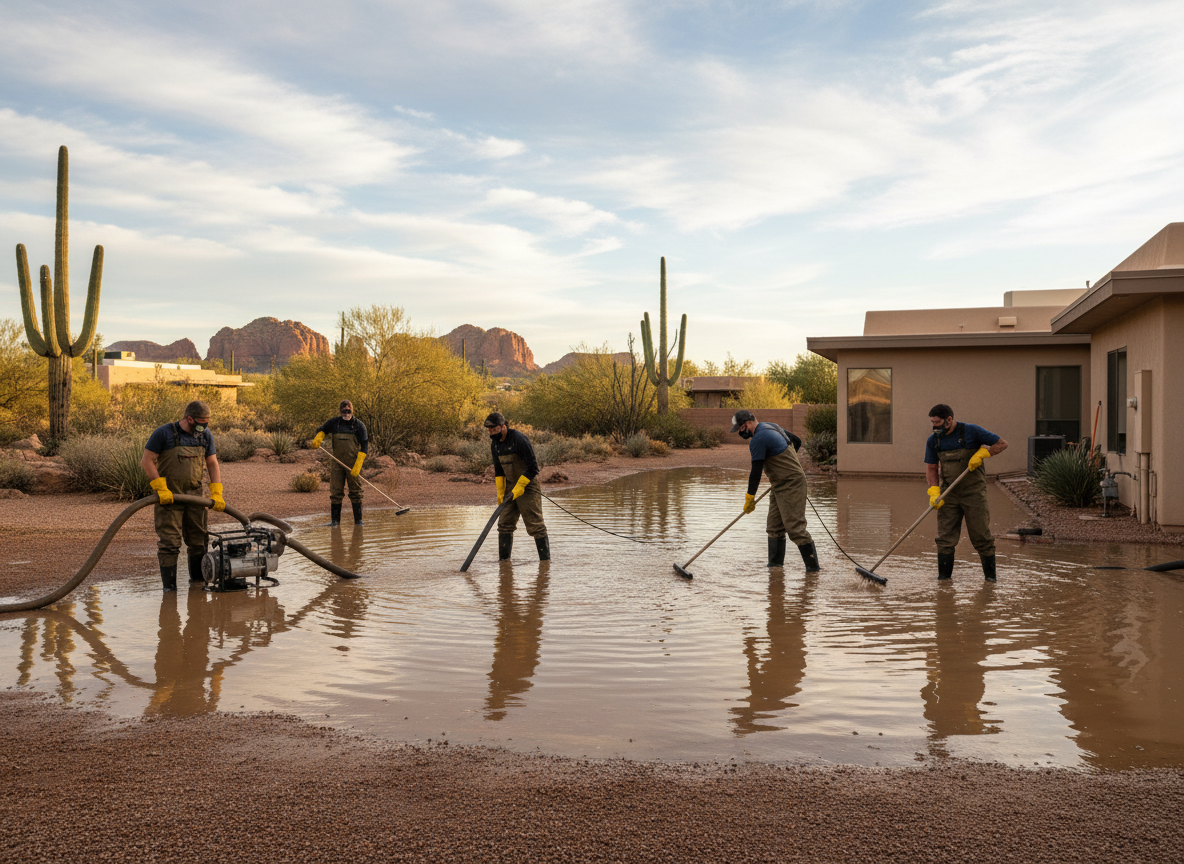
Removing standing water safely after a desert flood in Scottsdale starts with deploying submersible pumps rated for 2,000–4,000 gallons per hour while wearing waterproof boots and gloves to avoid electrical hazards from monsoon runoff. The area's hot desert climate with very hot summers means water evaporates quickly but leaves behind mineral deposits and hidden moisture in slab foundations common to homes built in the 1970s and 1980s. Work begins by shutting off power to affected areas, then pumping from the lowest point outward to prevent structural stress on older stucco and block homes found in Old Town Scottsdale and McCormick Ranch.
Assess Flood Depth and Contamination Risks
Before any extraction, measure water depth with a marked stick or laser level to determine pump size needed for volumes over 500 gallons. In Maricopa County, flash floods often mix with sediment from desert washes, raising contamination levels that require testing for bacteria before disposal. Homes near Scottsdale Waterfront or Gainey Ranch may see sewage intrusion from overloaded storm drains, so treat all standing water as potentially hazardous until proven otherwise. Document water lines on walls with photos for insurance claims and note how mild winter temperatures allow slower drying compared to summer heat. This assessment phase typically takes 30–60 minutes on a standard 2,000-square-foot property and guides whether professional Water Extraction & Removal is required.
Select Equipment and Pumping Strategy
Choose gas-powered or electric submersible pumps with automatic float switches for continuous operation in basements or garages common in Troon North and Desert Mountain properties. Position the pump intake on a flat board to avoid sucking up debris that clogs hoses during removal of 1,000–3,000 gallons typical after a summer storm. Run discharge hoses downhill toward street drains or approved collection points, never onto neighboring lots in dense neighborhoods like Scottsdale Civic Center. Pair the pump with a wet vac for final inches of water, working in sections to avoid spreading moisture into drywall. The hot desert climate accelerates pump overheating, so monitor motor temperature and provide shade during daytime operations.
Maintain Safety Throughout Extraction
Always wear N95 respirators and eye protection when disturbing floodwater that may contain mold spores or chemicals from nearby Camelback Mountain runoff. Keep extension cords elevated on hooks and use GFCI protection to prevent shocks in humid conditions that persist even after the rain stops. Evacuate pets and children until water drops below 1 inch, then ventilate with fans pointed outward to push moist air outside rather than recirculating it through HVAC systems in Paradise Valley or Tempe homes. Check for hidden pockets under cabinets or in crawl spaces, common in South Scottsdale construction, before declaring an area clear.
Finish with Drying and Follow-Up Steps
After pumping, use commercial dehumidifiers set to 45–50% relative humidity for 3–5 days to pull residual moisture from concrete slabs that retain water longer in Scottsdale's mild winters. Place moisture meters on flooring every 24 hours until readings fall below 12% to prevent hidden mold growth. Homeowners in North Scottsdale should inspect attic insulation and wall cavities where desert winds can drive water upward. Review our guide on Drying Out Homes After Summer Rains in Scottsdale for equipment rental details and Preventing Mold After Flooding in Arizona Homes for long-term prevention. Contact Scottsdale Restoration Solutions at 7111 E Thomas Rd during Mon–Fri 8am–6pm or Sat 9am–2pm if water volume exceeds what a single pump can handle.