
2026-08-31 · Daniel Wilson
Monsoon Flood Preparation for Scottsdale Homes
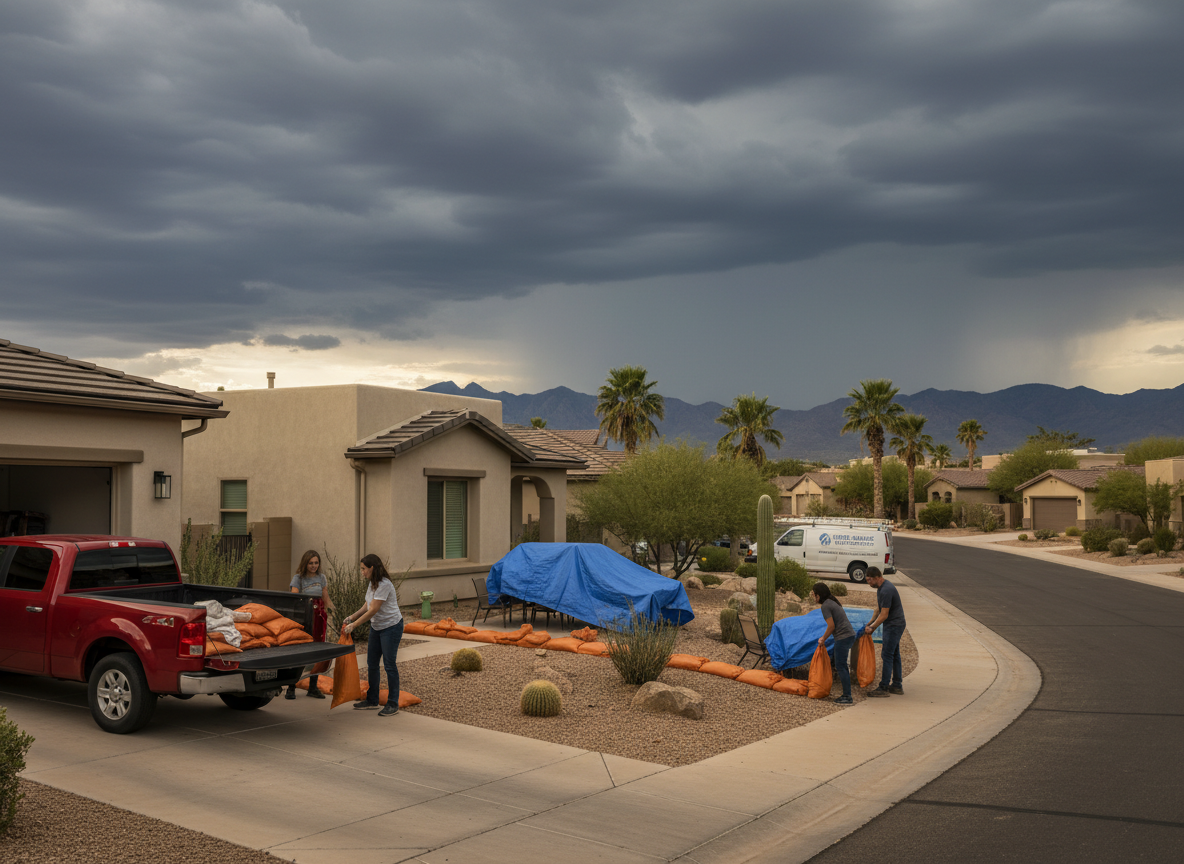
Scottsdale homes face monsoon flooding mainly from intense summer downpours that drop 1-2 inches in under an hour, overwhelming flat roofs, low-lying yards, and aging stucco foundations common in Old Town Scottsdale and McCormick Ranch. Preparation starts with clearing drainage paths around the property, elevating valuables in basements or garages, and sealing exterior penetrations before July arrives.
Assessing Property Drainage in Scottsdale Neighborhoods
Homes in McCormick Ranch and Gainey Ranch often sit on lots with minimal slope, so monsoon water pools against foundation walls within minutes. Walk the perimeter after every storm to check for low spots near driveways and patios, then regrade soil to direct flow toward street drains. In North Scottsdale areas near Troon North and Desert Mountain, rocky terrain can channel water into unexpected paths, so install French drains or extend downspouts at least 6 feet from the house. Residents near Camelback Mountain and Scottsdale Fashion Square report that clogged community gutters frequently back water into yards, making quarterly cleaning essential. These steps reduce the chance of water entering through sliding doors or utility penetrations common in 1980s-1990s construction throughout Maricopa County.
Sealing and Protecting Vulnerable Entry Points
Flat roofs on many Scottsdale homes in Paradise Valley and Tempe-adjacent pockets collect debris that blocks scuppers during monsoons. Inspect roof drains and apply elastomeric coating to seams every 3-5 years to handle the thermal expansion from 110-degree summer days. Install door sweeps and threshold dams on ground-level entries, especially in older stock around Scottsdale Civic Center where original construction used less robust flashing. Check window wells and add covers rated for 40 mph wind-driven rain. These targeted actions keep interior moisture below levels that trigger mold growth in drywall and carpet padding.
Creating a Monsoon Response Plan
Keep a battery-powered pump and shop vac ready in garages across South Scottsdale, where power outages during storms last 4-8 hours. Store sandbags or water-absorbent socks near low doorways and assign family members specific roles for moving furniture to upper levels. Track National Weather Service alerts for Maricopa County flash flood warnings and have a pre-arranged meeting spot outside flood-prone washes near the Scottsdale Waterfront. Practice the plan twice a year so everyone knows how to shut off main water valves quickly when sewage lines back up from overwhelmed municipal systems.
Knowing When Professional Help Is Required
Even with preparation, water that reaches carpet or drywall requires extraction within 24-48 hours to prevent secondary damage. Flood Damage Cleanup teams use moisture meters to locate hidden saturation in slab homes common throughout the area. For properties near North Scottsdale washes, Storm Water Damage Restoration addresses both surface and subsurface intrusion. After any event, follow guidance in Preventing Mold After Flooding in Arizona Homes to protect indoor air quality. If sewage mixes with floodwater, immediate Sewage Backup Cleanup prevents health risks in homes built before 2000.
Post-Monsoon Drying and Maintenance
Once storms pass, run dehumidifiers set to 50% or lower for at least 72 hours in affected rooms. Check crawl spaces in Troon North and Desert Mountain homes where poor ventilation allows moisture to linger under flooring. Schedule annual inspections of irrigation lines and roof flashings before the next season. These habits, combined with the drying techniques outlined in Drying Out Homes After Summer Rains in Scottsdale, keep structures sound through repeated monsoon cycles.